Where the Water Is Actually Coming From
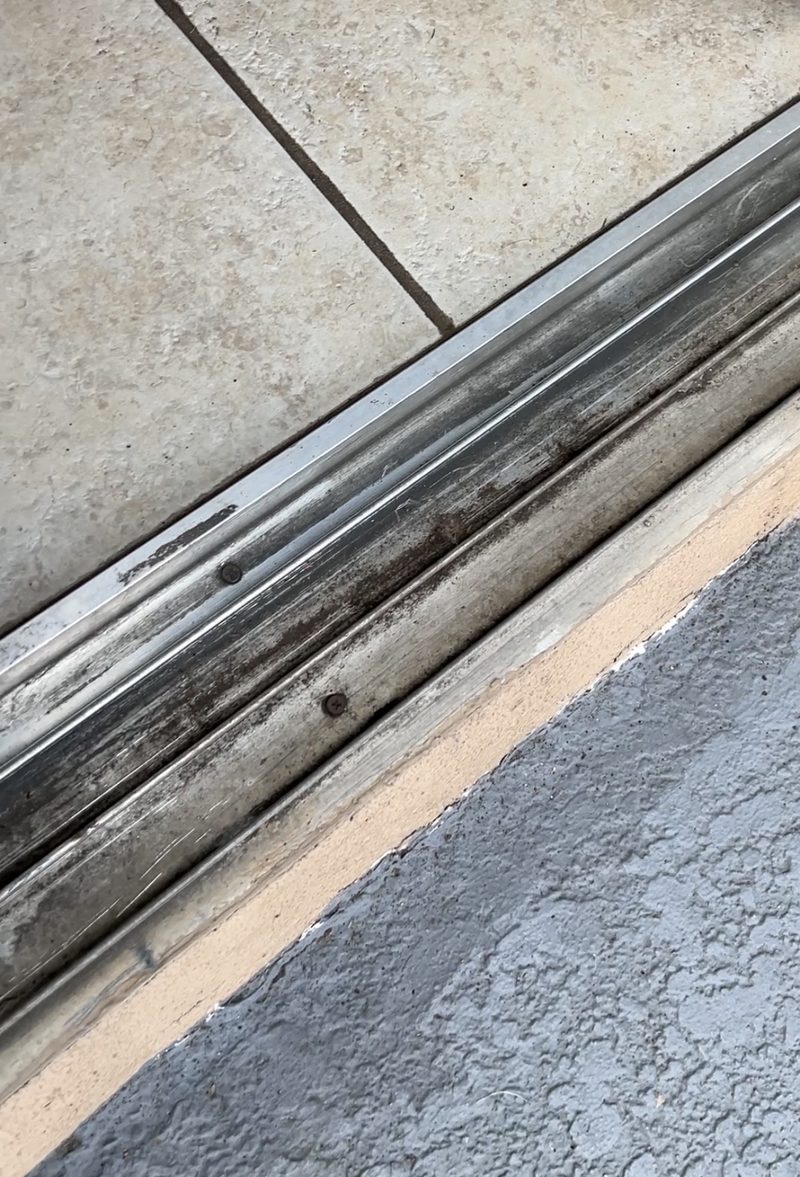
Most sliding glass door leaks in Central Florida come in at the bottom corners, right where the panel meets the sill. That is also the spot where the door was designed to drain. Every sliding door track has small weep holes or slots on the outside face that let rainwater escape. When those openings fill with sand, leaves, or dead bugs, the track turns into a trough. During a heavy afternoon storm it fills up and spills over the inside lip.
Other common entry points we find:
- Worn or shrunken weatherstripping (wool pile or rubber fin seals) along the vertical edges
- The interlock, where the two panels overlap in the middle, no longer closing tight
- A door that has dropped on worn rollers, leaving a gap at the top and pressure at the bottom
- Failed caulk or sealant between the frame and the wall opening
- A cracked or corroded sill, common on older aluminum doors near the coast

A Quick Test You Can Do
On a dry day, pour a cup of water slowly into the outside channel of the track and watch. It should run out through the weep holes within a minute or two. If it sits there, the drainage is blocked. If it drains fine, the leak is more likely a seal or alignment problem, and the next thing to check is whether daylight shows around the closed door at the top or along the edges.
How We Stop the Leak
We start with the cause rather than a bead of caulk. Caulking over a weep hole is one of the most common DIY mistakes we see, because it blocks the only way water can get out. Our usual process:
- Clear and flush the track and weep holes, and replace missing weep covers so they do not refill
- Check roller height and adjust or replace rollers so the panel sits level and seals evenly
- Replace worn weatherstripping and interlock seals with the correct profile for your door
- Reseal the frame perimeter where the original sealant has cracked or pulled away
- Inspect the sill for cracks or corrosion and repair or replace that section if needed
Before we leave, we run water against the door to confirm it drains and stays dry inside.
Why It Gets Worse in Florida
Central Florida storms drop a lot of water in a short time, often blown sideways by wind. A door that stays dry in a light rain can leak badly in a July downpour or a tropical system. Left alone, standing water wears out flooring, swells baseboards, and rots wood subfloors. It also invites mold behind the trim. Catching it early is a much smaller repair than fixing water damage later.
Get It Checked
We handle this repair every week across Orlando, Dr. Phillips, Kissimmee, Winter Park, and the Space Coast, usually with same-day appointments available. We give you a free estimate before any work starts, and most leak repairs are finished in one visit.